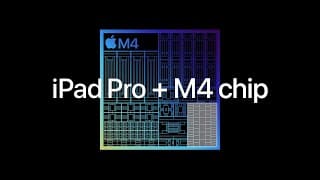
They are closely matched: Apple M1 GPU (8 Core) scores 51/100 and Apple M4 (8 Core) scores 49/100 in our overall comparison — within 2 points. Neither is a clear winner overall, so the decision comes down to the specific features and price that matter most to you.
Apple M1 GPU (8 Core) vs Apple M4 (8 Core)
Verdict
Our overall take, at a glance
Key takeaways
- Apple M4 (8 Core) leads Apple M1 GPU (8 Core) overall by 22 points (66 vs 44 out of 100).
Apple M4 (8 Core) leads overall
Apple M4 (8 Core)
66
Apple M1 GPU (8 Core)
44
In-depth analysisAI
AI-generated from the cited sources — may be incomplete or inaccurate; verify important details before deciding · generated Jun 2026.
Apple M1 GPU (8 Core)
The Apple M1 GPU is an integrated graphics solution built into the M1 series of System-on-a-Chip processors. It provides graphical processing capabilities alongside the CPU and unified memory for Mac computers and iPads. This hardware solution is designed to offer high performance, especially in power efficiency, for a range of everyday computing tasks.
Best for Creative professionalsBest for Students/ProductivityBest for General use
Pros
- Integrated system approach ensures efficient data sharing between the GPU and unified memory.
- The architecture allows for strong overall performance per watt across various applications.
- Provides dedicated graphics horsepower suitable for creative workflows and media consumption.
Cons
- Though designed efficiently, it is limited to the specific hardware generation of Mac devices using M1.
- Compared to professional-grade desktop GPUs, its specialized focus may limit extreme rendering capabilities.
Apple M4 (8 Core)
The Apple M4 is a specialized System-on-a-chip designed by Apple, forming the core processing unit for high-end devices, including modern iMacs and MacBook models. Featuring an advanced architecture that integrates CPU, GPU, and NPU components, it is primarily intended for professionals requiring strong performance in demanding creative and computational tasks.
Best for Professional Content CreationBest for AI/Machine Learning WorkloadsBest for High-Performance Computing (HPC)
Pros
- Incorporates an advanced Neural Processing Unit (NPU) with a notable capability to accelerate AI workloads, compared to previous generations of the chip.
- Supports hardware acceleration for modern functions like AV1 decoding, mesh shading, and ray tracing within its GPU architecture.
- Employs high-speed LPDDR5X unified memory, offering substantial bandwidth to support multiprocessing applications.
- The M4 series is built on a highly dense manufacturing process (3 nm), enabling the integration of numerous cores over 28 billion transistors.
Cons
- Specific core configurations (CPU/GPU counts) vary greatly across its Pro and Max variants, which requires careful selection for targeted performance needs.
- Memory bandwidth capacity is highly dependent on the specific model variant utilized, ranging from lower base limits to exceptionally high capacities.
Value for Money
Which is the better deal for the price
Enter today's price for each product to see which offers better value. Use the same currency for both.
Apple M1 GPU (8 Core)
Apple M4 (8 Core)
Detailed Specifications
The full spec sheet, side by side
Frequently Asked Questions
Common questions about Apple M1 GPU (8 Core) vs Apple M4 (8 Core) comparison
Apple M1 GPU (8 Core) and Apple M4 (8 Core) are compared side by side above across every spec in the gpus category — including performance, features and design — each scored 0–100 so you can see exactly where one leads the other. Our overall scores are 51/100 for Apple M1 GPU (8 Core) and 49/100 for Apple M4 (8 Core).
It's close — Apple M1 GPU (8 Core) (51/100) and Apple M4 (8 Core) (49/100) score almost the same. Pick based on price and the individual specs that matter most to you; the comparison above shows where each one pulls ahead.
Other Popular Comparisons
Explore more product comparisons

Apple M1 GPU (8 Core)
Apple M4 Max GPU (40 Core)
VS
Apple M1 GPU (8 Core)
Apple M4 Pro GPU (20 Core)
VS
Apple M1 GPU (8 Core)
Apple M1 Ultra GPU
VS
Apple M1 GPU (8 Core)
Apple M4 GPU (10 Core)
VS
Apple M1 GPU (8 Core)
Apple M4 Pro GPU (16 Core)
VS
Apple M1 GPU (8 Core)
Apple M4 (8 Core)
VS
Apple M1 GPU (8 Core)
Apple M4 Pro (12 Core)
VS

Apple M1 GPU (8 Core)
Apple M2 Pro GPU (10 Core)
VS
Apple M1 GPU (8 Core)
Apple M2 GPU (8 Core)
VS
Apple M1 GPU (8 Core)
Apple M4 Max GPU
VS
Apple M1 GPU (8 Core)
Apple M5 Max GPU
VS
Apple M1 GPU (8 Core)
Apple M4 Pro GPU
VS