Nvidia GeForce RTX 5090 vs NVIDIA RTX 3080 Ti
Verdict
Our overall take, at a glance
Key takeaways
- Nvidia GeForce RTX 5090 leads NVIDIA RTX 3080 Ti overall by 29 points (85 vs 56 out of 100).
- Nvidia GeForce RTX 5090 stands out on Core Specifications Base Power: 525 W, Core Specifications Maximum Power: 700 W, Core Specifications Lithography Process: 3 nm.
- Best value: NVIDIA RTX 3080 Ti (from $1,199) — the strongest score-per-dollar of the two.
Nvidia GeForce RTX 5090 leads overall
Nvidia GeForce RTX 5090
85
NVIDIA RTX 3080 Ti
56
Why it stands out
- Core Specifications Base Power: 525 W
- Core Specifications Maximum Power: 700 W
- Core Specifications Lithography Process: 3 nm
In-depth analysisAI
AI-generated from the cited sources — may be incomplete or inaccurate; verify important details before deciding · generated Jul 2026.
Nvidia GeForce RTX 5090
The Nvidia GeForce RTX 5090 is the flagship model of the GeForce RTX 50 series, which is the successor to Nvidia's GeForce 40 series. This GPU utilizes the Blackwell architecture, featuring fourth-generation RT cores and fifth-generation Tensor Cores for various compute tasks.
Best for Professional computingBest for Advanced renderingBest for AI compute
Pros
- Supports GDDR7 video memory
- Uses the Blackwell microarchitecture with high graphics frequencies and large L2 caches
- Features fourth-generation RTX cores for hardware-accelerated real-time ray tracing and fifth-generation Tensor Cores
NVIDIA RTX 3080 Ti
The NVIDIA RTX 3080 Ti is a high-end graphics card built on the Ampere GPU architecture, aimed at demanding gamers and creative professionals. Launched at a premium $1,200 price point, it features hardware-accelerated ray tracing and Tensor cores to deliver performance that closely approaches the flagship RTX 3090.
Best for High-resolution gaming with demanding real-time ray tracing effectsBest for Running local AI models and hardware-accelerated workstation rendering
Pros
- Gaming and production performance that nearly matches the flagship RTX 3090
- Hardware-level acceleration for ray-traced visuals and local AI applications
- Substantial generational performance improvements over older Turing-based models
Cons
- Highly expensive launch price of $1,200 that offers diminishing performance returns over the base RTX 3080
- Can experience high operating temperatures, particularly regarding memory heat
Value for Money
Which is the better deal for the price
Pre-filled with launch prices where known — enter today's price for an up-to-date check. Use the same currency for both.
Nvidia GeForce RTX 5090
NVIDIA RTX 3080 Ti
Performance
Higher benchmark score = faster
Nvidia GeForce RTX 509038,858
NVIDIA RTX 3080 Ti26,800
Benchmark score — a measured indicator of raw performance, not a guarantee of real-world speed.
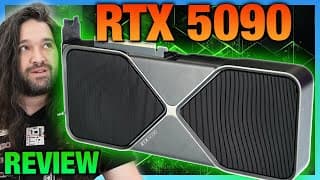
Review Videos
Hand-picked expert reviews for each product
Detailed Specifications
The full spec sheet, side by side