Why some smartwatches last a day and others last weeks
An Apple Watch needs charging nightly; a Garmin can go weeks. The screen and the software explain most of it.
By the Let’s Compare Editorial Team · 1 min read · Updated September 24, 2026
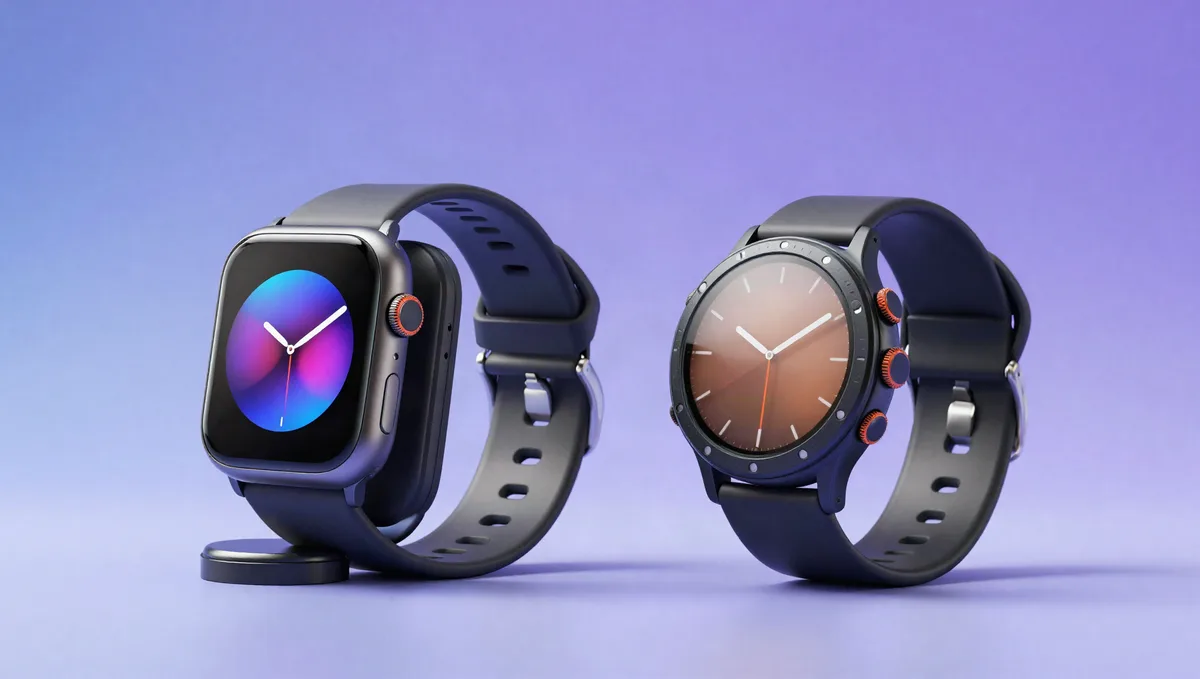
Apple rates the Apple Watch Series 10 for up to 18 hours. Garmin rates the Fenix 7 for up to 18 days in smartwatch mode. Both are smartwatches, so where does a 24-fold difference come from?
Rated battery life: two ends of the scale
| Watch | Screen | Rated battery |
|---|---|---|
| Apple Watch Series 10 | OLED | Up to 18 hours |
| Garmin Fenix 7 | Transflective MIP | Up to 18 days (smartwatch mode) |
The screen
Most full-featured smartwatches use bright, colourful OLED screens. They look great, but lighting pixels costs power, especially with the display always on. Some outdoor watches, like the Fenix 7, use a transflective memory-in-pixel (MIP) display instead. It's lit by the light around it, so it stays readable in bright sun and uses very little power. It also looks duller than OLED indoors.
The software
The other half is what the watch is running. Apple's watchOS and Google's Wear OS are full app platforms: third-party apps, voice assistants, rich notifications, often a cellular radio. That's the appeal, and it's also what drains the battery. Garmin's own software does fewer things, and does them with far less overhead, which is why even Garmin's OLED models tend to last days rather than hours.
Which trade-off suits you
If you want the watch to be an extension of your phone (apps, payments, replies, calls), accept daily charging, and pick a routine that works, like charging while you shower. If you care about sleep tracking, long runs or multi-day hikes, a watch that lasts a week or more makes those features actually usable, since a watch on the charger tracks nothing.
Related explainers
- Smartwatch health sensors explained: ECG, SpO2 and GPS
What the sensors measure, which claims are regulator-backed, and how platform lock-in can switch a feature off.
Sources & further reading
The facts and figures in this article come from the references below (some of them not in English), so you can check them yourself.