They are closely matched: AMD EPYC 7413 scores 80/100 and Intel Core i9 14900K scores 80/100 in our overall comparison — within 1 points. Neither is a clear winner overall, so the decision comes down to the specific features and price that matter most to you.
AMD EPYC 7413 vs Intel Core i9 14900K
Updated Nov 2026 · Scored by the Let’s Compare Data Engine · How we score
For most buyers the Intel Core i9 14900K is the better pick — it scores 70/100 to the AMD EPYC 7413's 67, leading on Integrated Graphics and Benchmark. Choose the AMD EPYC 7413 instead if you want to spend less.
Verdict
Our overall take, at a glance
Key takeaways
- Intel Core i9 14900K and AMD EPYC 7413 are closely matched overall (within 3 points).
- Intel Core i9 14900K stands out on Core Specifications L2 Cache: 32 MB (167% more), Core Specifications Maximum Frequency: 6 GHz (67% more), Core Specifications L1 Cache: 2,176 KB (42% more).
- AMD EPYC 7413 counters with Core Specifications L3 Cache: 128 MB (256% more), Core Specifications Threads: 48, Core Specifications Base Power Consumption: 180 W (44% more).
Intel Core i9 14900K and AMD EPYC 7413 are closely matched
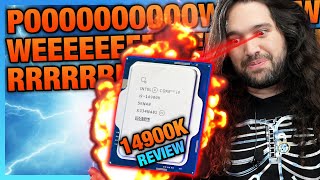
Intel Core i9 14900K
70
AMD EPYC 7413
67
Where Intel Core i9 14900K stands out
- Core Specifications L2 Cache: 32 MB (167% more)
- Core Specifications Maximum Frequency: 6 GHz (67% more)
- Core Specifications L1 Cache: 2,176 KB (42% more)
Where AMD EPYC 7413 stands out
- Core Specifications L3 Cache: 128 MB (256% more)
- Core Specifications Threads: 48
- Core Specifications Base Power Consumption: 180 W (44% more)
In-depth analysisAI
AI-generated from the cited sources — may be incomplete or inaccurate; verify important details before deciding · generated Nov 2026.
AMD EPYC 7413
The AMD EPYC 7413 is a 24-core, 48-thread server processor designed for enterprise data centers and multi-tenant cloud environments. Built on a 7nm manufacturing process, it features a 2.7 GHz base clock speed, a maximum boost frequency of 3.6 GHz, and a substantial 128 MB L3 cache. Operating at a default power envelope of 165W, it delivers strong multi-core performance for virtualized workloads and server applications.
Best for Enterprise server virtualization requiring dense multi-threading capabilityBest for Data center operations seeking balanced multi-core compute efficiency within a 1
Pros
- High thread capacity with 24 cores and 48 threads for parallel server workloads
- Generous 128 MB L3 cache helps reduce memory latency in data-intensive tasks
- Manageable 165W base power rating with a maximum cap of 200W
Cons
- Lacks integrated graphics capability
- Locked multiplier prevents manually adjusting clock ratios
- Lower single-core base frequency of 2.7 GHz relative to desktop-grade processors
Intel Core i9 14900K
The Intel Core i9 14900K is a flagship desktop processor built for high-end gaming and demanding workstation tasks. Operating on the LGA1700 platform, it features a 24-core and 32-thread architecture with boost clock speeds reaching up to 6.0 GHz. It comes unlocked for overclocking and features integrated Intel UHD Graphics 770 alongside 36 MB of L3 cache.
Best for High-end gaming setups targeting maximum frame ratesBest for Heavy computational tasks such as 3D rendering and video production
Pros
- High maximum clock speed of 6.0 GHz delivers strong single-core performance
- 24-core and 32-thread layout provides substantial multi-threaded processing capacity
- Integrated Intel UHD Graphics 770 offers built-in display capabilities without a discrete GPU
Cons
- Substantial power consumption peaking up to 253 W under maximum load
- High power draw requires extensive thermal management and cooling hardware
Value for Money
Which is the better deal for the price
Pre-filled with launch prices where known — enter today's price for an up-to-date check. Use the same currency for both.
AMD EPYC 7413
Intel Core i9 14900K
Performance
Higher benchmark score = faster
AMD EPYC 741350,641
Intel Core i9 14900K58,163
Benchmark score — a measured indicator of raw performance, not a guarantee of real-world speed.
Detailed Specifications
The full spec sheet, side by side
Frequently Asked Questions
Common questions about AMD EPYC 7413 vs Intel Core i9 14900K comparison
AMD EPYC 7413 and Intel Core i9 14900K are compared side by side above across every spec in the cpus category — including performance, features and design — each scored 0–100 so you can see exactly where one leads the other. Our overall scores are 80/100 for AMD EPYC 7413 and 80/100 for Intel Core i9 14900K.
It's close — AMD EPYC 7413 (80/100) and Intel Core i9 14900K (80/100) score almost the same. Pick based on price and the individual specs that matter most to you; the comparison above shows where each one pulls ahead.
Which would you buy?
Cast your voteOther Popular Comparisons
Explore more product comparisons


AMD EPYC 7413
AMD Ryzen Threadripper PRO 5995WX
VS

Intel Core i9 14900K
Intel Xeon Platinum 8380
VS
AMD EPYC 7413
AMD Ryzen Threadripper 3990X
VS
Intel Core i9 14900K
Intel Xeon W 3375
VS
AMD EPYC 7413
AMD Ryzen Threadripper PRO 3995WX
VS

Intel Core i9 14900K
Intel Core i9 14900KF
VS
AMD EPYC 7413
AMD Ryzen Threadripper PRO 5975WX
VS

Intel Core i9 14900K
Intel Core Ultra 9 285K
VS

AMD EPYC 7413
AMD Ryzen 9 9955HX3D
VS
Intel Core i9 14900K
Intel Xeon Platinum 8375C
VS
AMD EPYC 7413
AMD EPYC 7713
VS
Intel Core i9 14900K
Intel Xeon W 3365
VS