Based on our overall comparison score, Intel Xeon W 3375 rates higher at 85/100 versus 65/100 for Intel Core i7 13700 — a 20-point lead. Intel Xeon W 3375 is the stronger overall pick, though the right choice still depends on which specs matter most to you; the full spec table above breaks down every difference.
Intel Xeon W 3375 vs Intel Core i7 13700
Updated Nov 2026 · Scored by the Let’s Compare Data Engine · How we score
For most buyers the Intel Xeon W 3375 is the better pick — it scores 78/100 to the Intel Core i7 13700's 55, leading on Core Specifications and Benchmark. Choose the Intel Core i7 13700 instead if integrated graphics matters most to you, where it comes out ahead.
Verdict
Our overall take, at a glance
Key takeaways
- Intel Xeon W 3375 leads Intel Core i7 13700 overall by 23 points (78 vs 55 out of 100).
- Intel Xeon W 3375 stands out on Core Specifications Base Power Consumption: 270 W (315% more), Core Specifications L1 Cache: 3,040 KB (116% more), Core Specifications L2 Cache: 47.5 MB (98% more).
Intel Xeon W 3375 leads overall
Intel Xeon W 3375
78
Intel Core i7 13700
55
Why it stands out
- Core Specifications Base Power Consumption: 270 W (315% more)
- Core Specifications L1 Cache: 3,040 KB (116% more)
- Core Specifications L2 Cache: 47.5 MB (98% more)
In-depth analysisAI
AI-generated from the cited sources — may be incomplete or inaccurate; verify important details before deciding · generated Nov 2026.
Intel Xeon W 3375
This document is a list documenting Intel Xeon microprocessors organized by generation. It details various models within different core-based architectures, including the 3000 series and 5000 series.
Best for Reference/ResearchBest for Comparison
Pros
- The source provides an exhaustive chronological listing of numerous Xeon processors
- Processors are categorized based on model lineages (e.g., E31x, X32x, X33x, E52xx)
Intel Core i7 13700
The Intel Core i7 13700 is a 16-core, 24-thread desktop processor built on the LGA1700 socket, aimed at high-demand gaming and multi-threaded productivity builds. Operating at a 65W base power rating with boost speeds up to 5.2 GHz, it delivers strong out-of-the-box computing power for users who do not require custom tuning.
Best for Multi-threaded content creation and heavy multitasking workloadsBest for System builds requiring reliable out-of-the-box performance without manual tunin
Pros
- High multi-threaded capacity with 16 cores and 24 threads
- Efficient 65W base power consumption under light workloads
- Integrated Intel UHD Graphics 770 provides direct video output
- Peak boost clock speeds up to 5.2 GHz for fast single-core response
Cons
- Locked multiplier prevents standard manual overclocking
- Power consumption spikes up to 219W under maximum full-core load
Value for Money
Which is the better deal for the price
Pre-filled with launch prices where known — enter today's price for an up-to-date check. Use the same currency for both.
Intel Xeon W 3375
Intel Core i7 13700
Performance
Higher benchmark score = faster
Intel Xeon W 337558,686
Intel Core i7 1370035,840
Benchmark score — a measured indicator of raw performance, not a guarantee of real-world speed.
Detailed Specifications
The full spec sheet, side by side
Frequently Asked Questions
Common questions about Intel Xeon W 3375 vs Intel Core i7 13700 comparison
Intel Xeon W 3375 and Intel Core i7 13700 are compared side by side above across every spec in the cpus category — including performance, features and design — each scored 0–100 so you can see exactly where one leads the other. Our overall scores are 85/100 for Intel Xeon W 3375 and 65/100 for Intel Core i7 13700.
If you want the higher-rated cpus option overall, Intel Xeon W 3375 (85/100) edges out Intel Core i7 13700 (65/100). But if Intel Core i7 13700 is cheaper or stronger on the specific specs you care about, it can still be the better buy — use the spec table and strengths profile above to decide.
Which would you buy?
Cast your voteOther Popular Comparisons
Explore more product comparisons

Intel Xeon Platinum 8380
Intel Xeon W 3375
VS

Intel Core i7 13700
Intel Xeon Platinum 8380
VS

Intel Core i9 14900KF
Intel Xeon W 3375
VS
Intel Core i7 13700
Intel Core i9 14900KF
VS

Intel Core Ultra 9 285K
Intel Xeon W 3375
VS
Intel Core i7 13700
Intel Core Ultra 9 285K
VS
Intel Xeon Platinum 8375C
Intel Xeon W 3375
VS
Intel Core i7 13700
Intel Xeon Platinum 8375C
VS
Intel Xeon W 3365
Intel Xeon W 3375
VS
Intel Core i7 13700
Intel Xeon W 3365
VS
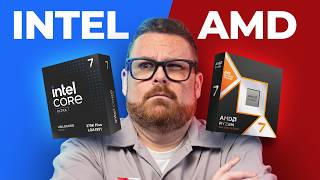
Intel Core Ultra 7 270K Plus
Intel Xeon W 3375
VS
Intel Core i7 13700
Intel Core Ultra 7 270K Plus
VS