Based on our overall comparison score, Nvidia GeForce RTX 3090 Ti rates higher at 83/100 versus 37/100 for Apple M5 Pro GPU — a 46-point lead. Nvidia GeForce RTX 3090 Ti is the stronger overall pick, though the right choice still depends on which specs matter most to you; the full spec table above breaks down every difference.
Nvidia GeForce RTX 3090 Ti vs Apple M5 Pro GPU
Updated Nov 2026 · Scored by the Let’s Compare Data Engine · How we score
For most buyers the Nvidia GeForce RTX 3090 Ti is the better pick — it scores 87/100 to the Apple M5 Pro GPU's 33, leading on Memory and API Support. Choose the Apple M5 Pro GPU instead if core specifications matters most to you, where it comes out ahead.
- Apple M5 Pro GPU has no published G3D Mark result, so it scores lower.
Verdict
Our overall take, at a glance
Key takeaways
- Nvidia GeForce RTX 3090 Ti leads Apple M5 Pro GPU overall by 54 points (87 vs 33 out of 100).
- Nvidia GeForce RTX 3090 Ti stands out on Memory Bandwidth: 1,008.3 GB/s (228% more), Miscellaneous Platform: Desktop.
Nvidia GeForce RTX 3090 Ti leads overall
Nvidia GeForce RTX 3090 Ti
87
Apple M5 Pro GPU
33
Why it stands out
- Memory Bandwidth: 1,008.3 GB/s (228% more)
- Miscellaneous Platform: Desktop
In-depth analysisAI
AI-generated from the cited sources — may be incomplete or inaccurate; verify important details before deciding · generated Nov 2026.
Nvidia GeForce RTX 3090 Ti
The Nvidia GeForce RTX 3090 Ti is a high-end desktop graphics card built on an 8nm manufacturing process, designed for extreme performance demands. Featuring 24 GB of GDDR6X memory and boost clock speeds reaching up to 1.86 GHz, it provides extensive video memory and high compute throughput. It targets extreme enthusiasts, digital creators, and machine learning practitioners who require massive graphical memory and performance.
Best for Heavy 3D rendering and content creation workflows requiring vast VRAM capacityBest for High-frame-rate 4K gaming enthusiasts
Pros
- Large 24 GB GDDR6X VRAM capacity easily handles complex 3D scenes and heavy datasets
- High memory bandwidth exceeding 1 TB/s for rapid data transfer
- Strong compute performance rated at 40 TFLOPS for FP32 tasks
Cons
- Substantial power consumption with a maximum power draw rated at 450 W
Apple M5 Pro GPU
The Apple M5 Pro GPU is an integrated graphics processor built on a 3-nanometer lithography process. Designed for Apple's high-performance silicon lineup, it utilizes a shared unified memory architecture providing up to 307 GB/s of memory bandwidth to deliver efficient graphics compute capabilities.
Best for Graphics and compute workloads requiring high unified memory bandwidthBest for Power-efficient performance in integrated system environments
Pros
- High memory bandwidth reaching 307 GB/s across unified memory
- Built on an advanced 3-nanometer manufacturing process
Cons
- Relies on shared integrated system memory rather than dedicated video RAM
Value for Money
Which is the better deal for the price
Pre-filled with launch prices where known — enter today's price for an up-to-date check. Use the same currency for both.
Nvidia GeForce RTX 3090 Ti
Apple M5 Pro GPU
Review Videos
Hand-picked expert reviews for each product
Detailed Specifications
The full spec sheet, side by side
Frequently Asked Questions
Common questions about Nvidia GeForce RTX 3090 Ti vs Apple M5 Pro GPU comparison
Nvidia GeForce RTX 3090 Ti and Apple M5 Pro GPU are compared side by side above across every spec in the gpus category — including performance, features and design — each scored 0–100 so you can see exactly where one leads the other. Our overall scores are 83/100 for Nvidia GeForce RTX 3090 Ti and 37/100 for Apple M5 Pro GPU.
If you want the higher-rated gpus option overall, Nvidia GeForce RTX 3090 Ti (83/100) edges out Apple M5 Pro GPU (37/100). But if Apple M5 Pro GPU is cheaper or stronger on the specific specs you care about, it can still be the better buy — use the spec table and strengths profile above to decide.
Which would you buy?
Cast your voteOther Popular Comparisons
Explore more product comparisons
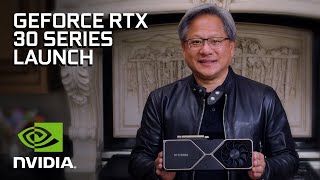

Nvidia GeForce RTX 3090 Ti
Nvidia GeForce RTX 5090
VS
Apple M1 Ultra GPU
Apple M5 Pro GPU
VS

Nvidia GeForce RTX 3090 Ti
Nvidia GeForce RTX 4090
VS
Apple M4 Max GPU
Apple M5 Pro GPU
VS

Nvidia GeForce RTX 3090 Ti
Nvidia GeForce RTX 5080
VS
Apple M4 Max GPU (40 Core)
Apple M5 Pro GPU
VS

Nvidia GeForce RTX 3090 Ti
Nvidia GeForce RTX 4080
VS
Apple A18 Pro GPU
Apple M5 Pro GPU
VS

Nvidia GeForce RTX 3090 Ti
Nvidia GeForce RTX 4080 Super
VS
Apple M5 Max GPU
Apple M5 Pro GPU
VS

Nvidia GeForce RTX 3090 Ti
Nvidia GeForce RTX 5070 Ti
VS
Apple M2 Max GPU
Apple M5 Pro GPU
VS