They are closely matched: Sony Bravia 9 II 65 scores 80/100 and Sony Bravia 5 65 scores 78/100 in our overall comparison — within 2 points. Neither is a clear winner overall, so the decision comes down to the specific features and price that matter most to you.
Sony Bravia 9 II 65 vs Sony Bravia 5 65
Updated Nov 2026 · Scored by the Let’s Compare Data Engine · How we score
For most buyers the Sony Bravia 9 II 65 is the better pick — it scores 80/100 to the Sony Bravia 5 65's 68, leading on Picture Quality and Gaming. Choose the Sony Bravia 5 65 instead if panel matters most to you, where it comes out ahead.
Verdict
Our overall take, at a glance
Key takeaways
- Sony Bravia 9 II 65 leads Sony Bravia 5 65 overall by 12 points (80 vs 68 out of 100).
- Sony Bravia 9 II 65 stands out on Audio Output Power: 80 W (100% more).
Sony Bravia 9 II 65 leads overall
Sony Bravia 9 II 65
80
Sony Bravia 5 65
68
Why it stands out
- Audio Output Power: 80 W (100% more)
In-depth analysisAI
AI-generated from the cited sources — may be incomplete or inaccurate; verify important details before deciding · generated Nov 2026.
Sony Bravia 9 II 65
The Sony Bravia 9 II 65 is a 65-inch 4K Mini-LED LCD television designed for high-end home entertainment and bright-room viewing. Powered by the XR Processor built on the MediaTek Pentonic 1000 chipset, it delivers high-performance backlight control with a peak HDR brightness of 3,974 nits. Running on the Google TV platform, it features a 120 Hz refresh rate and an integrated 80-watt 2.2.2-channel audio layout.
Best for Bright living rooms requiring strong peak brightness to combat glareBest for Home theater setups looking for powerful integrated audio and Dolby Vision suppo
Pros
- Exceptionally high peak HDR brightness approaching 4,000 nits for strong bright-room performance
- Mini-LED backlight array with local dimming for refined contrast control
- Integrated 80 W 2.2.2-channel speaker system with Dolby Atmos decoding
- Native 120 Hz panel with VRR support for modern gaming setups
Cons
- Only two of the four total HDMI inputs support HDMI 2.1 bandwidth
Sony Bravia 5 65
The Sony Bravia 5 65 is a 65-inch 4K Mini-LED LCD television aimed at modern home theater setups and gaming configurations. Driven by Sony's Cognitive Processor XR, it features local dimming along with a native 120Hz refresh rate and Dolby Vision HDR support. Operating on the Google TV smart platform, this television also provides low-latency gaming capabilities via Variable Refresh Rate (VRR) and Auto Low Latency Mode (ALLM).
Best for Smooth 4K console gaming at 120Hz with variable refresh ratesBest for Streaming Dolby Vision HDR film and television content via Google TV
Pros
- Mini-LED panel equipped with local dimming for improved contrast management
- Cognitive Processor XR delivers advanced picture processing
- Native 120Hz display with VRR and ALLM for responsive gaming
- Modern connectivity including Wi-Fi 6 support
Cons
- Fairly heavy display weight of 24.9 kg without the stand
- Panel depth of 5.8 cm creates a slightly thicker profile when wall-mounted
Value for Money
Which is the better deal for the price
Enter today's price for each product to see which offers better value. Use the same currency for both.
Sony Bravia 9 II 65
Sony Bravia 5 65
Physical Comparison
Weight, side by side
Sony Bravia 5 65
24.9kg
Weight
Review Videos
Hand-picked expert reviews for each product
Detailed Specifications
The full spec sheet, side by side
Frequently Asked Questions
Common questions about Sony Bravia 9 II 65 vs Sony Bravia 5 65 comparison
Sony Bravia 9 II 65 and Sony Bravia 5 65 are compared side by side above across every spec in the tvs category — including performance, features and design — each scored 0–100 so you can see exactly where one leads the other. Our overall scores are 80/100 for Sony Bravia 9 II 65 and 78/100 for Sony Bravia 5 65.
It's close — Sony Bravia 9 II 65 (80/100) and Sony Bravia 5 65 (78/100) score almost the same. Pick based on price and the individual specs that matter most to you; the comparison above shows where each one pulls ahead.
Which would you buy?
Cast your voteOther Popular Comparisons
Explore more product comparisons


Sony Bravia 5 65
Sony Bravia 9 65
VS
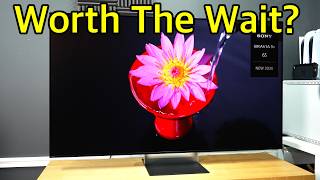
Sony Bravia 9 65
Sony Bravia 9 II 65
VS

Sony Bravia 5 65
Sony Bravia 8 II OLED 65
VS
Sony Bravia 8 II OLED 65
Sony Bravia 9 II 65
VS

Sony A80L OLED 65
Sony Bravia 5 65
VS
Sony A80L OLED 65
Sony Bravia 9 II 65
VS
Sony Bravia 5 65
Sony Bravia 8 OLED 65
VS
Sony Bravia 8 OLED 65
Sony Bravia 9 II 65
VS
Sony Bravia 5 65
Sony Bravia 7 65
VS
Sony Bravia 7 65
Sony Bravia 9 II 65
VS
Sony Bravia 5 65
Sony Bravia 7 II 65
VS
Sony Bravia 7 II 65
Sony Bravia 9 II 65
VS