
They are closely matched: TCL QM8 65 scores 78/100 and Sony Bravia 8 OLED 65 scores 77/100 in our overall comparison — within 1 point. Neither is a clear winner overall, so the decision comes down to the specific features and price that matter most to you.
TCL QM8 65 vs Sony Bravia 8 OLED 65
Updated Nov 2026 · Scored by the Let’s Compare Data Engine · How we score
For most buyers the TCL QM8 65 is the better pick — it scores 71/100 to the Sony Bravia 8 OLED 65's 68, leading on Picture Quality and Gaming. Choose the Sony Bravia 8 OLED 65 instead if you want to spend less.
Verdict
Our overall take, at a glance
Key takeaways
- TCL QM8 65 and Sony Bravia 8 OLED 65 are closely matched overall (within 3 points).
- TCL QM8 65 stands out on Gaming Refresh Rate (VRR Max): 144 Hz (20% more), Audio Output Power: 60 W (20% more).
TCL QM8 65 and Sony Bravia 8 OLED 65 are closely matched
TCL QM8 65
71
Sony Bravia 8 OLED 65
68
Where TCL QM8 65 stands out
- Gaming Refresh Rate (VRR Max): 144 Hz (20% more)
- Audio Output Power: 60 W (20% more)
In-depth analysisAI
AI-generated from the cited sources — may be incomplete or inaccurate; verify important details before deciding · generated Nov 2026.
TCL QM8 65
The TCL QM8 is a flagship Mini-LED television designed for home theater enthusiasts and gamers looking for high-end performance at a competitive price point. It features a 1,600-zone local-dimming array to achieve deep, near-OLED black levels and reaches an impressive peak HDR brightness of over 3,000 nits.
Best for Bright-room viewing with challenging ambient lightBest for Competitive high-refresh-rate console or PC gamingBest for High-contrast HDR movie watching
Pros
- High peak HDR brightness exceeding 3,000 nits for strong specular highlights
- Deep contrast and minimized blooming thanks to a 1,600-zone local-dimming array
- Excellent gaming capabilities with support for 4K resolution at a 144Hz refresh rate
Cons
- Suboptimal viewing angles that degrade picture quality when viewed from the side
- May require manual calibration to correct out-of-the-box color inaccuracies
Sony Bravia 8 OLED 65
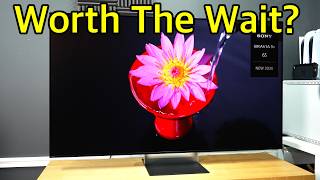
The Sony Bravia 8 OLED 65 is a premium 65-inch 4K television aimed at home theater enthusiasts and gamers seeking precise picture processing and deep contrast. Built around a self-emitting OLED panel, it delivers deep black levels alongside high-bandwidth HDMI 2.1 connectivity for modern video sources and consoles. It is designed primarily for buyers who prioritize refined image accuracy and dark-room cinematic performance.
Best for Dark-room movie watching and home cinema setupsBest for High-frame-rate console gaming utilizing HDMI 2.1 bandwidth
Pros
- Self-emitting OLED display provides infinite contrast and deep black levels
- HDMI 2.1 connectivity supports high-bandwidth input for modern gaming consoles
- Refined picture processing tuned for natural colors and shadow detail
Cons
- Carries a premium price tag relative to competing OLED alternatives
- OLED panel structure offers lower peak brightness than mini-LED alternatives in high ambient light
Value for Money
Which is the better deal for the price
Pre-filled with launch prices where known — enter today's price for an up-to-date check. Use the same currency for both.
TCL QM8 65
Sony Bravia 8 OLED 65
Physical Comparison
Weigh them up, then compare real dimensions in 3D
TCL QM8 65Sony Bravia 8 OLED 65
TCL QM8 65 is 0.9 kg (4%) heavier than Sony Bravia 8 OLED 65.
Review Videos
Hand-picked expert reviews for each product
Detailed Specifications
The full spec sheet, side by side
Frequently Asked Questions
Common questions about TCL QM8 65 vs Sony Bravia 8 OLED 65 comparison
TCL QM8 65 and Sony Bravia 8 OLED 65 are compared side by side above across every spec in the tvs category — including performance, features and design — each scored 0–100 so you can see exactly where one leads the other. Our overall scores are 78/100 for TCL QM8 65 and 77/100 for Sony Bravia 8 OLED 65.
It's close — TCL QM8 65 (78/100) and Sony Bravia 8 OLED 65 (77/100) score almost the same. Pick based on price and the individual specs that matter most to you; the comparison above shows where each one pulls ahead.
Which would you buy?
Cast your voteOther Popular Comparisons
Explore more product comparisons


TCL QM8 65
TCL QM8L 65
VS
Sony Bravia 8 OLED 65
Sony Bravia 9 II 65
VS
TCL QM7L 65
TCL QM8 65
VS

Sony Bravia 8 OLED 65
Sony Bravia 9 65
VS
TCL QM7K 65
TCL QM8 65
VS

Sony Bravia 8 II OLED 65
Sony Bravia 8 OLED 65
VS
TCL QM8 65
TCL QM9K 65
VS

Sony Bravia 5 65
Sony Bravia 8 OLED 65
VS

TCL QM8 65
TCL QM8K 65
VS

Sony A80L OLED 65
Sony Bravia 8 OLED 65
VS

TCL QM7 65
TCL QM8 65
VS
Sony Bravia 7 65
Sony Bravia 8 OLED 65
VS